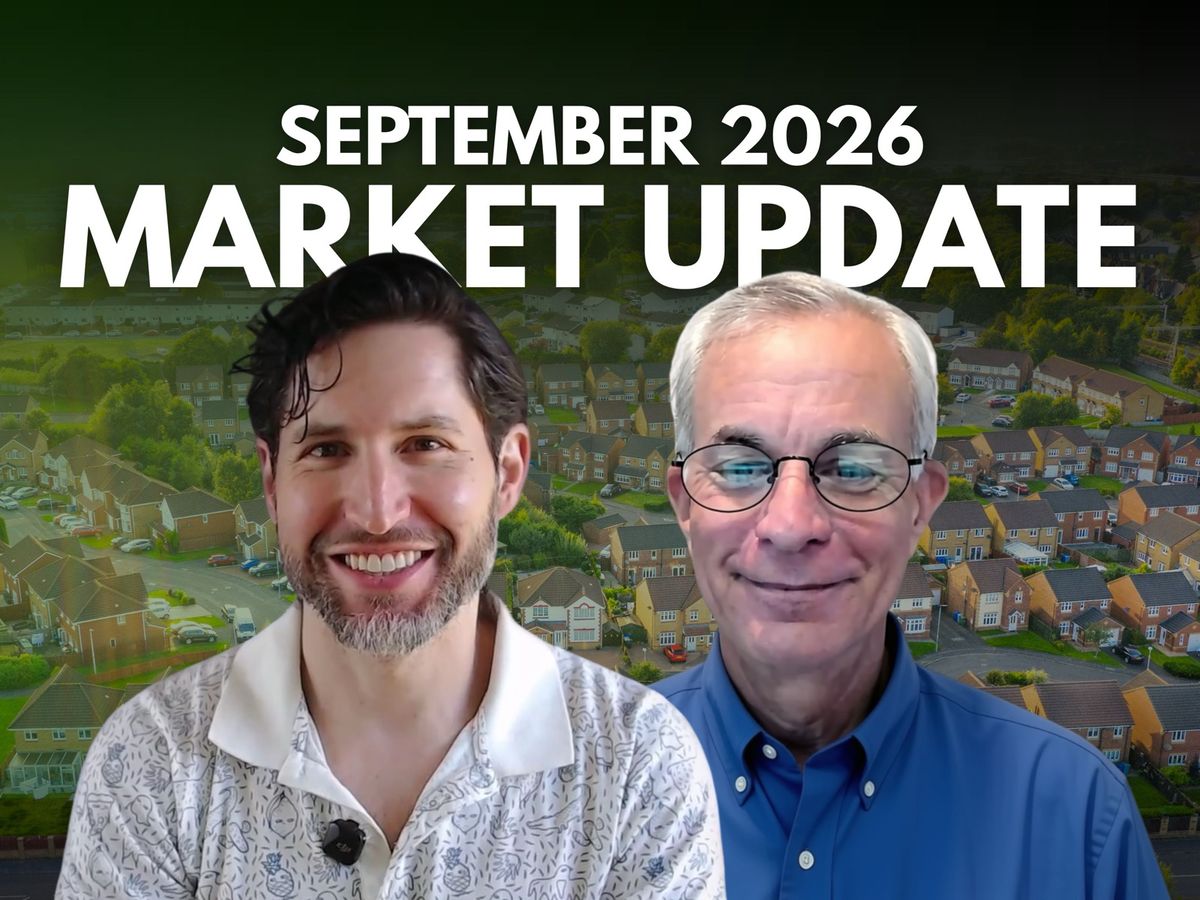
Pending sales dropped to 673 and inventory jumped to about 4.7 months. David Shapiro and Lee Abraham break down the September 2026 Austin numbers.
It's September, and we are back with another Austin real estate market update. My colleague Lee Abraham and I run the Shapiro Group here in Austin, and every month we open up the stats and walk you through what is actually happening in the numbers.
This month, the story is sales volume. Pending sales over the past month fell to 673, and that pushed monthly housing inventory up to about 4.7 months. Over the last couple of months it felt like we had plateaued around four months, so this one caught us a little by surprise.
Watch Now
Watch our video report below for all of the current statistics and our forecast for the Austin Real Estate Market. Or click here to watch it on YouTube.
Inventory Jumps to 4.7 Months
We started the month with 3,161 active listings. If you are selling 673 homes a month, that works out to about 4.7 months of inventory, a real jump from last month. The 12-month sales average is 742, so this month came in well under the recent pace.
Now the big question: will Austin reach six months of inventory? Six months or more is the technical line where the market shifts from a seller's market to a buyer's market. We have a feeling it's going to happen.
Seasonality won't tell us when. Three years ago, inventory jumped from August to September and landed at 4.95 months. Two years ago, it went down over the same stretch. Last year it stayed flat. Even the peaks move around. It looks like inventory peaked around October three years ago, around June two years ago, and in May last year. That's the new normal since COVID. So much of the volume now comes down to interest rates and narrative that we can't lean on the seasonal patterns of past markets.
One thing to watch in the fourth quarter. For the past couple of months, pending sales and new listings have been stepping down together in fairly even measure. Last year, pending sales crossed over new listings. When that happens, demand is outpacing supply, and that is the formula for price appreciation. Going into the holidays, we expect both lines to come down and converge.
The Headlines About Austin Are Turning Positive Again
From about 2012 through 2021, Austin was constantly in the news as a boomtown. That faded for a couple of years. In the last six months, the talk has started coming back. Our thesis: Austin pulled demand ahead, and now we are getting back on trend.
A few recent examples. One article named Austin the eighth hottest real estate market among big U.S. cities. Amazon Robotics is bringing a robotics facility here with 500 high-paying jobs, and those jobs feed every industry around them, from home sales to furniture to groceries.
Another ranking put Austin at #25 among the best big cities for first-time home buyers. That sounds middling until you see who is ahead of us: Indianapolis, Omaha, Colorado Springs. People aren't choosing between Omaha and Austin. The cities we really compete with sit near the bottom of the list. Chicago is at 49, DC at 53, San Diego at 59 and Boston at 60. New York, LA and San Francisco come in at 65, 67 and 68. Among our true competitors, Austin ranks first or second, depending on how you count.
I also came across a YouTube interview with an Austin-based autonomous boat company I had never heard of. It has 1,000 of its 1,500 employees here, a last valuation of $9.25 billion, and a newly announced $3.2 billion shipyard in Brownsville called Port Alpha. Asked why a maritime company would base itself in a landlocked city, the answer was people, the talent around them. That's the cycle Austin is in. The talent is here, so the jobs come, and the jobs bring more talent.
The September 2026 Numbers at a Glance
Active Listings & Inventory
Active listings: 3,161, about where we were last September
30-day pending sales: 673
Monthly housing inventory: about 4.7 months
Listings have leveled off, and we didn't hit a July peak of almost 4,000 listings. The jump in inventory comes from low sales volume.
Sales Per Month
About 700 sales
12-month average: 742
Back in 2021, this number was 1,167. Nothing in population growth, migration or the economy explains the slide to around 700. We think it's interest rates and pent-up demand. We are now more than four years into this market, and it looks like the norm until rates come down. Think of it as a coiled spring. The extra sales Austin saw in 2021 barely register next to the drop since then, because there was never enough inventory to meet demand back then. That's why prices jumped far more than sales did.
Average Sale Price
Up 0.5% year over year, up 3% month over month
Highest August since 2022, the second highest on record
The median sale price is down year over year. Even so, it's the second-highest August on record, behind last year. The median pulled back more than the average, which tells us the luxury segment is stronger than the rest of the market. Austin hasn't given back its gains. 2022 was the outlier, a bit of a bubble, and since then prices have settled into a tighter, steadier range.
Days to Sell
51 days
Up from 44 last month, and significantly lower than last year
This is the stat where seasonality still seems to hold, and we expect it to keep ticking up through the fourth quarter and into the first quarter of next year. It's also healthier than the inventory number would suggest. Homes that are priced right and look good are few and far between. When they hit the market, they sell, and that keeps the average down while the stagnant listings sit.
Mortgage Rates Drift Back Up
Looking at the 30-year rate over five years, rates climbed to about 7% in 2022 and hit 7.76% in 2023. They were trending down until February, when the Iran war started, and now they are moving back up. We are still a full point below that high. Rates are the driver behind our residential market. If they drop closer to 6%, that's good news, and getting below 6% is the magic number we keep talking about.
My Advice for September 2026
If you are Buying: We truly believe this is a buyer's opportunity before Austin gets into another cycle of price appreciation. Nobody can call the bottom. You usually only see it in the rear-view mirror. With short inventory and better affordability, and motivated sellers heading into the fourth quarter and the holidays, this is a smart time to buy and to invest.
If you are Selling: Price it right and make it attractive. Homes like that are scarce right now, and they still sell. The listings that sit are the stagnant ones, and with days to sell expected to climb through the holidays, that matters more than usual.
Want to know what is happening on your block? Austin real estate is hyper-local. It comes down to the neighborhood and even the specific home. If you want a deeper read on your property, reach out. Lee is a former appraiser, and there is nobody better in Austin when it comes to narrowing in on pricing. He would be happy to chat about your home and your goals.
Thanks for joining us. We will see you next month.